
Harvesting Perfection.
Harvesting is the final step in turning months of careful cultivation into high-quality flower. Knowing when to harvest is about more than watching the calendar, it’s about knowing personal preferences, reading the plant, and understanding the levels of maturity. Learning to evaluate trichomes, pistils, flower development, and overall plant health, you can harvest at the right moment to preserve the best possible combination of potency, aroma, flavor, and bag appeal. Our goal is to help you recognize that window with confidence and master harvesting.
Understanding Trichomes and Maturity
Cannabis maturity can be gauged by examining the trichomes, the tiny resin glands found across the surface of the flowers. As trichomes develop, they typically transition from clear to milky/cloudy and eventually amber, providing growers with a useful visual indicator of flower maturity and helping determine the ideal harvest window.
Clear Trichomes: Developing
Clear, glass-like trichomes generally indicate that the flowers are still developing and have not reached full maturity. Cannabinoid and terpene production is still progressing, and harvesting at this stage typically results in less-developed flowers and a potentially more stimulating or energetic experience. Clear trichomes are generally a sign that the plant would benefit from additional time to mature
Milky/Cloudy Trichomes: Peak Maturity
Milky or cloudy trichomes indicate that the flowers have reached a much more advanced stage of development. As the trichomes become opaque, cannabinoid production has progressed significantly, and the flowers are approaching their peak harvest window. This stage is often associated with strong potency and a balanced combination of cerebral and physical effects, making predominantly milky trichomes a popular harvest indicator.
Amber Trichomes: THC degrades to Cannibinol
Amber trichomes indicate that the plant has progressed beyond peak maturity and the trichomes are undergoing further chemical changes and degradation turning THC to Cannibinol. Harvesting with a higher percentage of amber trichomes is commonly associated with a heavier, more relaxing, and potentially sedating experience. Allowing some trichomes to turn amber can also provide additional time for less-developed lower flowers to swell and mature before the entire plant is harvested.
The Maturity Progression
Clear → Milky/Cloudy → Amber
As trichomes transition from clear to milky and eventually amber, the plant progresses from developing → peak maturity → advanced maturity, THC degrades to cannibinol. The ideal harvest point depends on the cultivar and the type of effects the grower wants to emphasize, so trichome color should be used as a guide rather than an absolute indicator of potency or effect.
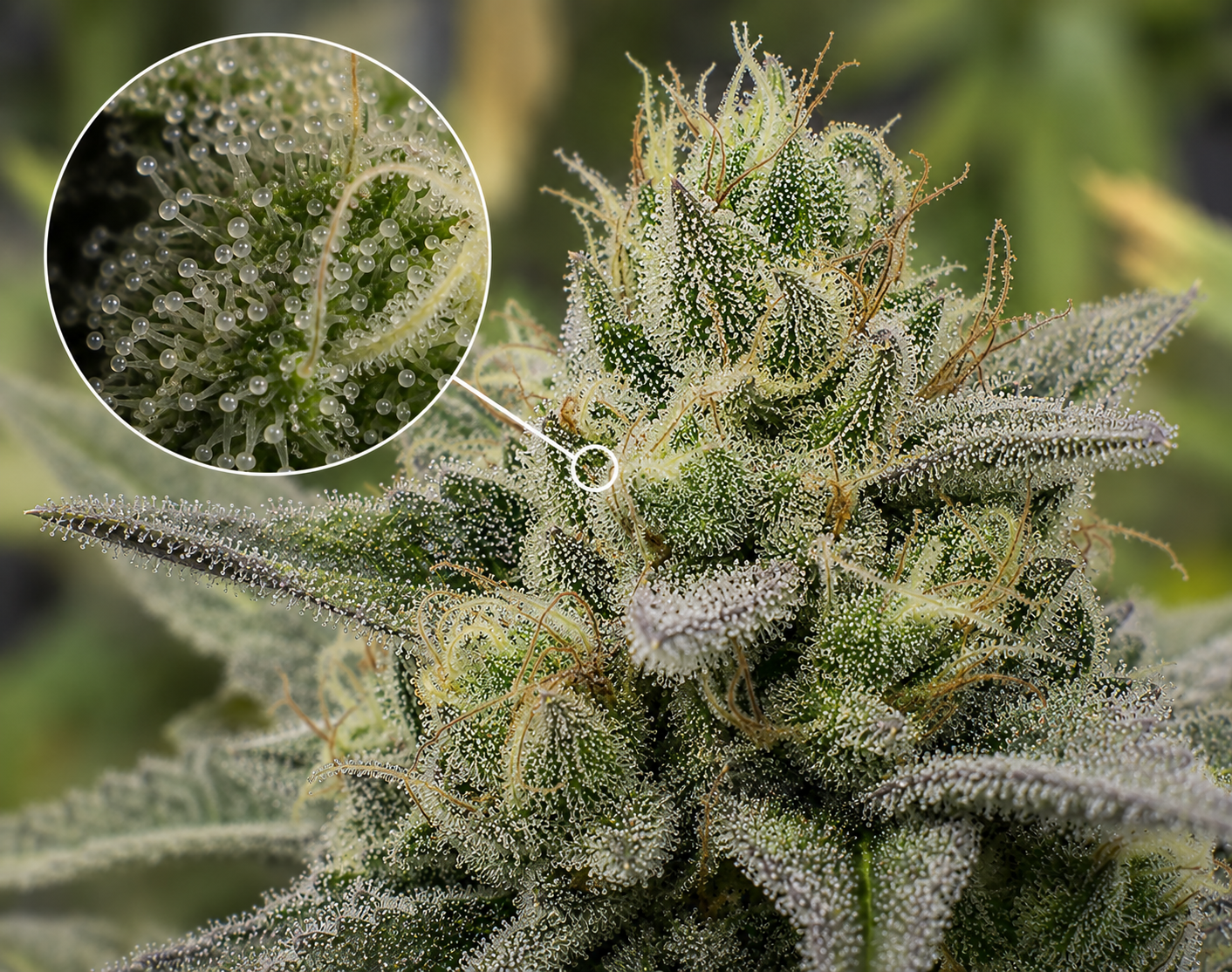
Clear Trichomes
This image shows predominantly clear trichomes, indicating that the flowers are still developing and have not yet reached peak maturity. At this stage, the plant is continuing to build cannabinoids and terpenes, and allowing additional time for the trichomes to become cloudy will allow the flowers to further mature and develop.
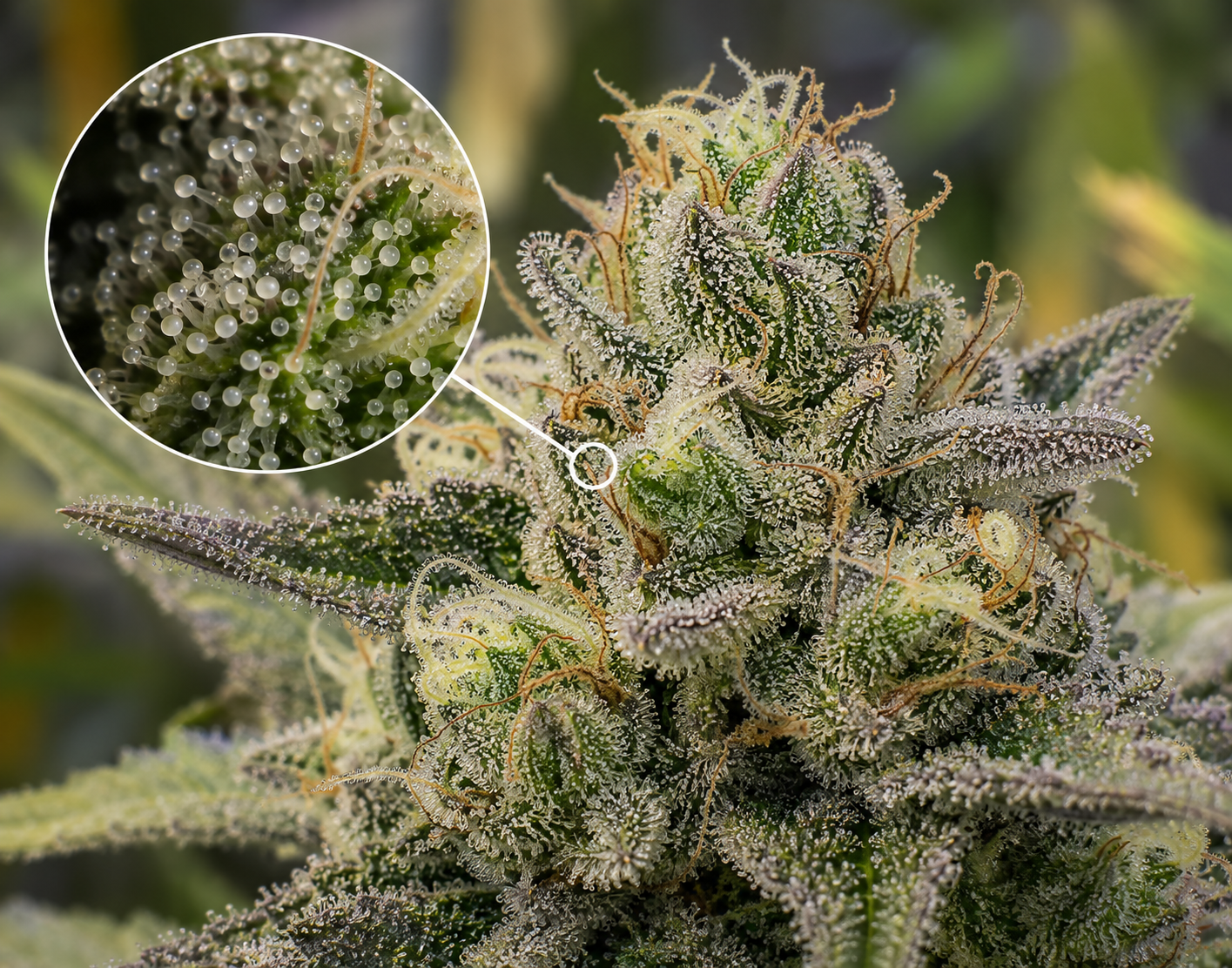
Cloudy Trichomes
This image shows predominantly milky or cloudy trichomes, indicating that the flowers have reached an advanced stage of maturity and are approaching their peak harvest window. At this stage, the trichomes have developed significantly and the flowers are producing high levels of cannabinoids and terpenes, making this a popular stage for growers seeking a balance of potency, flavor, and well-rounded effects.
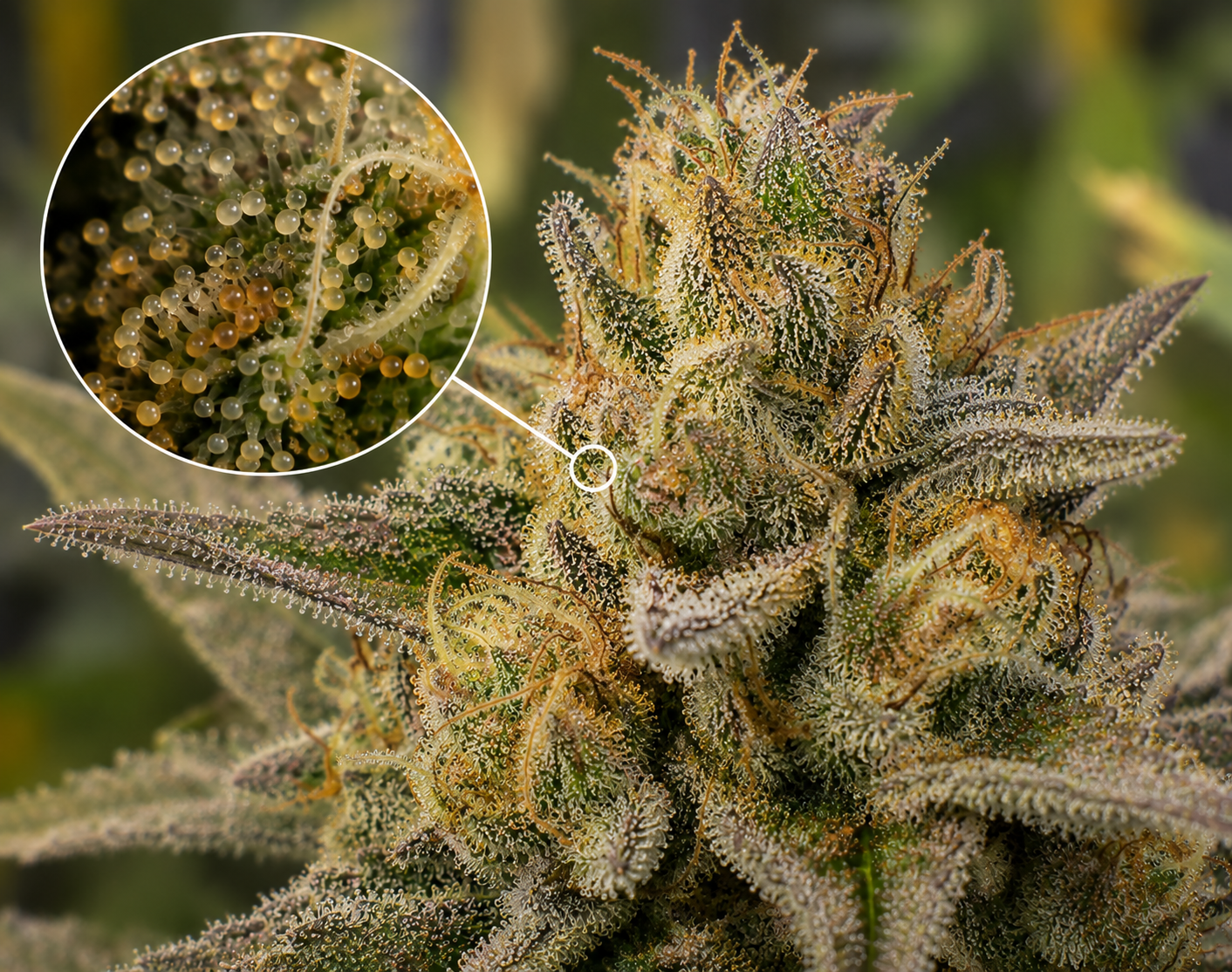
Amber Trichomes
This image shows predominantly amber trichomes, indicating that the flowers have progressed into an advanced stage of maturity and are beyond their peak development window. At this stage, the trichomes have undergone further chemical changes, and allowing a higher percentage to turn amber is often associated with a heavier, more relaxing experience while giving less-developed lower flowers additional time to mature.
Harvesting Timelines
🌱 80% Milky / 20% Clear
This represents an earlier harvest window, with most trichomes developed but a noticeable percentage still clear. The plant is approaching maturity, but some trichomes have not fully developed. The resulting experience is often described as more energetic, cerebral, and lively, although potency and effects can vary considerably between cultivars.
☁️ 100% Milky
When essentially all visible trichomes are cloudy or milky, the plant is generally considered to be at or near peak trichome maturity. This is often viewed as a good middle ground for growers seeking a combination of potency, strong flavor, and a relatively balanced effect. Depending on the cultivar, the experience may lean uplifting, euphoric, or relaxing.
🟠 90% Milky / 10% Amber | Second most popular choice
A small amount of amber indicates that the plant has moved further into its late-maturity window. With approximately 90% milky trichomes remaining, most trichomes are still at peak development while a portion has begun changing. This harvest point can provide a more rounded and relaxing experience while retaining much of the cerebral character associated with predominantly milky trichomes.
🟠 70–80% Milky / 20–30% Amber | Most popular choice
This represents a more advanced harvest window. A substantial portion of the trichomes have transitioned from milky to amber, and growers commonly associate this stage with a heavier, more relaxing and potentially sedating effect. It can be desirable for cultivars intended to produce a deeper body experience, particularly when the goal is relaxation rather than an energetic or cerebral effect.
🌎 Harvesting To Your Environment
Your ideal harvest window should also take your growing environment into account, especially when conditions increase the risk of bud rot, mold, or other flower-related problems. In humid environments or when dense flowers are beginning to retain excess moisture, harvesting slightly earlier may help reduce the risk of disease spreading and protect the quality of the crop rather than waiting for every flower to reach the same level of trichome maturity. Natural events such as heavy rain, storms, and prolonged periods of high humidity can leave flowers wet if outside and significantly increase the risk of bud rot and mold. When severe weather is approaching, harvesting slightly earlier may be preferable to exposing mature flowers to extended moisture and potentially losing an otherwise healthy crop. If your plant has already started to develop bud rot, you should immediately chop the affected areas and trash them and consider harvesting the rest of your plant before it worsens.
In simple terms:
Clear → energetic/less mature. Milky → peak maturity/balanced. Amber → increasingly heavy/relaxing.
*Note* Allowing the trichomes on the upper flowers to develop further and begin turning amber can give the lower flowers additional time to mature, swell, and develop their own trichomes. This can help improve overall flower development and create a more consistent level of maturity throughout the plant at harvest if chopping the entire plant at once.
*Note* The idea that amber trichomes always mean “more couch-lock” is an oversimplification. Terpene profile and cannabinoid composition often have a major influence on the actual experience, so trichome color should be treated as one harvest indicator rather than a guarantee of a particular effect.
How to Inspect Trichomes
The most reliable way to determine cannabis maturity is to inspect the trichomes directly under magnification. A 30–60× jeweler’s loupe is an inexpensive and effective option for most growers. Hold the loupe steadily against the flower and use a bright, neutral light to examine the trichome heads, looking for whether they are clear, cloudy/milky, or amber. Avoid judging maturity from a single spot, inspect several flowers from different areas of the plant, including the upper, middle, and lower buds. It is also important to examine the trichomes on the flower calyx itself, rather than relying primarily on sugar leaves, since leaf trichomes can mature differently and may give a misleading impression of overall flower maturity.
A high-quality smartphone can also be an excellent inspection tool, particularly when it can focus closely or has a dedicated macro camera. Current phones such as the Google Pixel 10 Pro/Pro XL, which feature a 48 MP ultrawide camera with Macro Focus, and the Samsung Galaxy S26 Ultra, with its high-resolution 200 MP main camera and multiple optical-zoom cameras, can capture highly detailed close-up images when used correctly. For the clearest results, stabilize the phone and plant, use good lighting, lock focus on the trichomes, and take several photographs from different locations. A clip-on smartphone macro lens or a dedicated USB digital microscope can provide even greater magnification and makes it easier to photograph and compare trichomes over several days. Digital microscopes in roughly the 60–120× range are commonly used for detailed trichome inspection and documentation.
Magnifying Methods:
🔍 30–60× jeweler’s loupe: Affordable, portable, and sufficient for identifying clear, milky, and amber trichomes.
📱 Modern high-end smartphone: Excellent for taking photographs and comparing maturity over time.
🔬 Clip-on macro lens: Improves the close-focus capability of a smartphone.
🖥️ USB digital microscope: Excellent for detailed inspection, photography, and documenting changes.
🔬 Dedicated handheld microscope: Useful when very high magnification is desired, although stability becomes increasingly important.
For the most accurate assessment, combine magnification with repeated observations rather than making the decision from one photograph or one flower. Look for the overall trend in trichome development across multiple bud sites, and use the percentage of clear, milky, and amber trichomes as a guide to the plant’s maturity rather than treating a specific ratio as an absolute harvest rule.